
KEY PROFILE:
Investigation brings insights to generations who sought family members’ fates
This is one in a series of profiles of a person honored by the Washington Coalition for Open Government for their effective use of Washington’s access laws in ways that benefit the community.
By Kie Relyea
Sydney Brownstone had a choice.
Stay on the date and keep exploring the abandoned psychiatric hospital near Sedro-Woolley in Skagit County, or ask the man who was in its small cemetery – with its unmarked graves and headstones disappearing into the earth – what he was doing with what looked like a hedge trimmer.
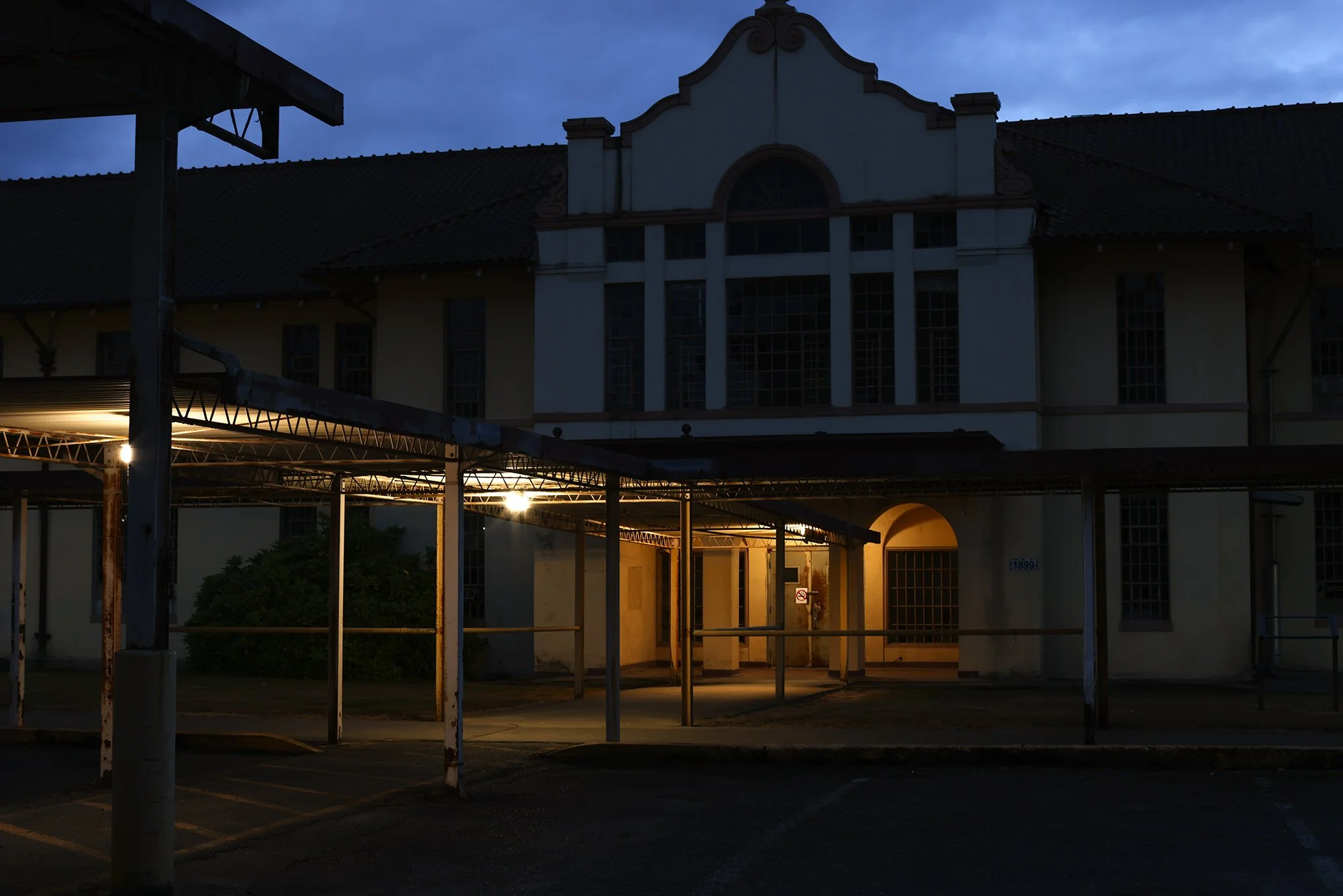
The Northern State Hospital grounds at dawn. (Karen Ducey / The Seattle Times)
Who were the people buried here? Why the unmarked graves? Brownstone, an investigative reporter for The Seattle Times, wondered as they approached the man, John Horne. Their conversation, in 2021, sparked a journey into the past of Northern State Hospital, which closed in 1973. Dozens of family members were finally able to find answers about patients who had been hidden away and forgotten.
The Seattle Times investigation grew into a series of stories, photo essays, a documentary film, searchable records of patients, an award-winning podcast in partnership with KUOW Public Radio.
Key to the project, titled “The lost patients of Washington’s abandoned psychiatric hospital,” was getting the state Attorney General’s Office to unseal the records, held in the Washington State Archives, of Northern State patients 50 years after their death. The Seattle Times then digitized the death records, dating from 1911-1963, so the public could access them for the first time.
It’s poignant, Brownstone said, that people alive today reached across time and space to resurrect the memory of people they’d never met.
“There’s something empathetic and beautiful about that to me,” Brownstone said.
For such efforts, Brownstone and Taylor Blatchford, engagement reporter for The Seattle Times, received the inaugural Jim and Birte Falconer Shine the Light Award from The Washington Coalition for Open Government, or WashCOG, in 2023 for their “heartfelt and haunting stories.”
Both credited the work of Seattle Times colleagues whose efforts helped tell the story with depth, accuracy and artistry in what Brownstone called an “unstoppable group project.”
“It definitely went far beyond the two of us,” Blatchford said.
For Blatchford, who helped decide that the best way to make the records useful to the public was to digitize two large books of death registers so they could be searched, the most poignant aspect of the project was hearing from readers who were grateful to The Times for publishing patient records that provided profound information about their loved ones.
“That was powerful,” Blatchford said.
WashCOG judges praised the journalists for using the state’s Public Records Act to help people affected by the information they uncovered.
George Erb, WashCOG’s secretary, said the organization recognizes journalists for work that focuses on transparency or that “use public records laws to shed light on significant civic issues.” The Times’ “Lost Patients” did that, and went deeper.
“The Northern State Hospital story was so striking because it was so different — and so personal,” Erb said. “It was about families trying to solve mysteries involving their parents and grandparents, only to be blocked by old confidentiality laws.” The released patient records also showed how people ended up in the state-run mental hospital. “The circumstances under which their relatives landed in Northern State in the first place added other layers of emotion and meaning,” Erb said.
Facing roadblocks
“Lost Patients” tracked the hopes, horrors and failures of mental institutions, and mental health care, through the lens of Northern State and its patients, most notably Lillian Massie, who was forced to stay there until her death at age 33 in 1934.
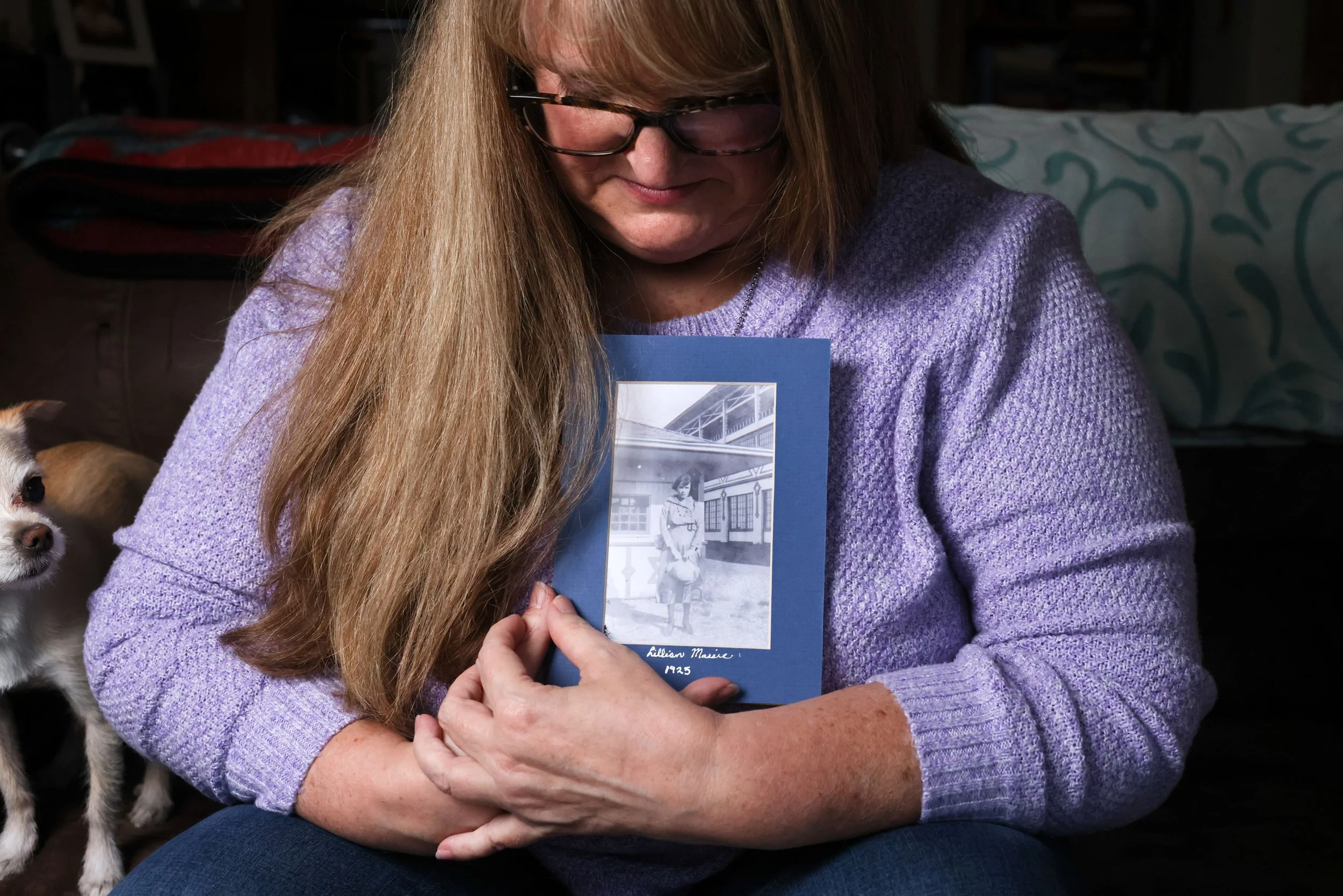
At her Auburn home, Carrie Davidson holds a photo of her great-grandmother, Lillian. (Karen Ducey / The Seattle Times)
Decades later her great-granddaughter, Carrie Davidson, would dig through public records in the U.S. and Canada in an attempt to uncover Massie’s fate. But Davidson was stymied until she came into contact with Brownstone, The Seattle Times investigation and the release of patient records.
“That was freaking amazing,” Davidson, an Auburn resident, said of the Attorney General’s decision to release the records, which she credited to pressure from The Seattle Times.
Davidson wasn’t alone in facing roadblocks put in place by agencies.
“We had heard from family members who had searched for information and asked the archives for any records on loved ones,” Blatchford said, adding families were told they couldn’t access them.
Family members were turned away, but The Seattle Times wasn’t.
Blatchford said agencies do sit up straight when news organizations ask for public records, urging other journalists to remember that their role is to advocate for people, to push a little harder.
As for how The Seattle Times obtained those patient records, Brownstone said they simply explained what they needed and then asked the archivist to check with the AG’s Office, which came back with the new guidance.
Sifting through the records was no easy feat.
Scavengers had taken what they could from Northern State after it was closed, according to Brownstone, and a lot of the records were piecemeal. Documents were old and delicate. Onion-skin receipts were jammed in with photos of patients that had been burned out so they weren’t identifiable along with correspondence between state officials and doctors running the institution. There was a great deal to go through. Not all of it was relevant.
“It’s like you’re looking at a book that’s been partially redacted every few lines,” Brownstone said.
Hidden among those pieces of the past were the people who had lived, and died, at Northern State.
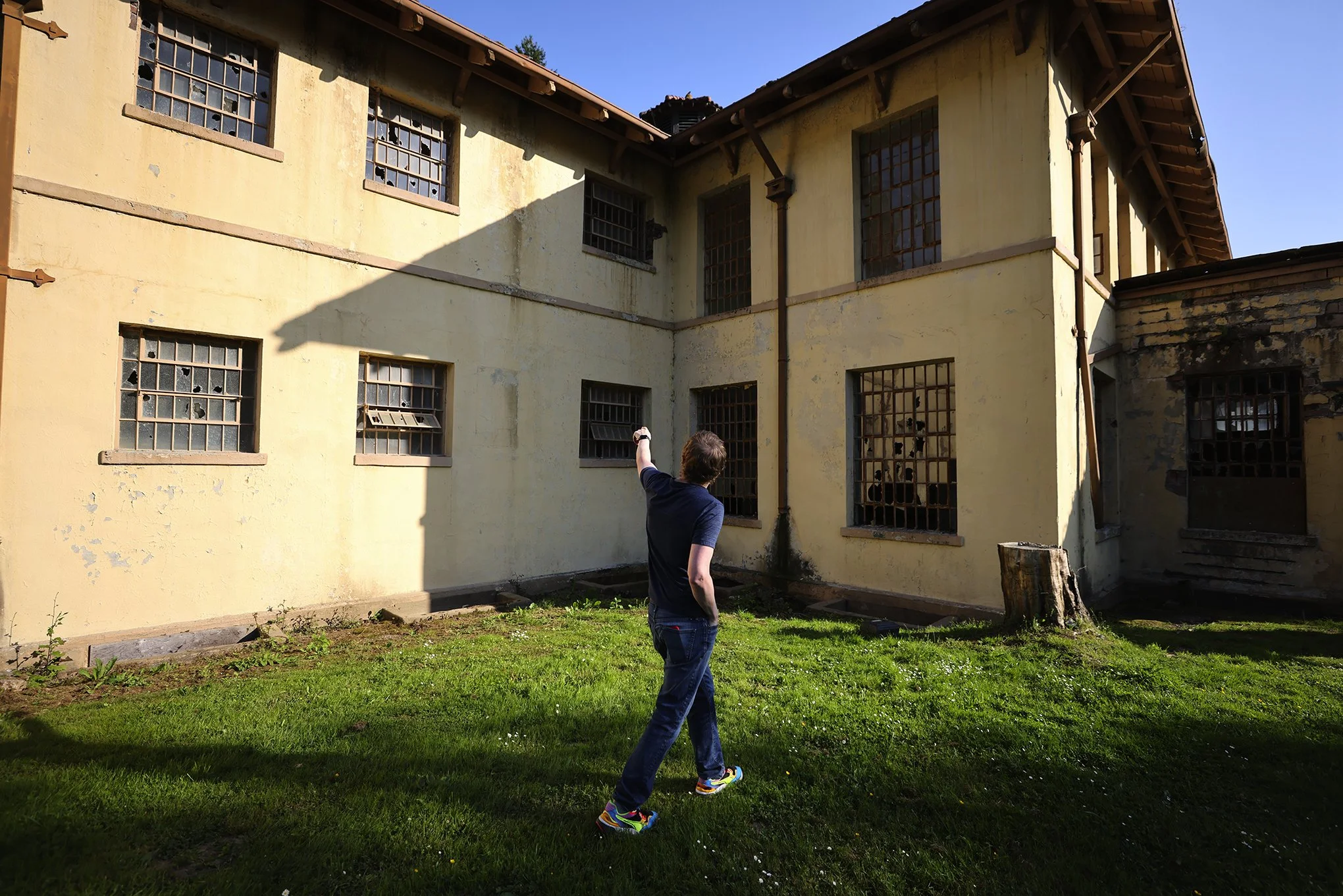
Horne walks around a former men’s ward at the Northern State Hospital grounds. (Karen Ducey / The Seattle Times)
What happened to Lillian?
In September 2022, Davidson learned about Brownstone’s investigation via Horne – described as an “encyclopedia of the cemetery” by Brownstone for his efforts to find and identify former patients buried there – who was running Friends of Northern State, a private Facebook group with 2,800 members.
By then, Davidson had spent a decade searching off and on for information about her great-grandmother, Lillian Massie, after her grandmother shared Massie’s name during a drive around Columbia City, a neighborhood of southeastern Seattle, to help jog her grandmother’s memory following a series of ministrokes.
Over time, Davidson reached out to caseworkers, searched genealogy sites Ancestry and Family Search (the latter run by the Church of Jesus Christ of Latter-day Saints), and asked for information from the state archives and the Washington State Department of Social and Health Services. She went to theSkagit County Historical Museumand branches of the state archives in Olympia and Bellingham.
She found bits of information in her quest to fill out the scant details available about Massie’s life. Then she was put in touch with Brownstone through Horne. The first time Davidson talked to the reporter, Brownstone was at the Northwest Regional Branch of the state archives in Bellingham and had been looking at patient records all day.
“I said, ‘What are you talking about?’” Davidson recalled, adding that was when she learned about the AG’s decision to release the patient records.
A lost relative
Massie’s story was heartbreaking.
Her husband forced her into Northern State against her will in 1925, according to The Seattle Times project, which revealed that he raped her, married her, gave her syphilis, and then had her committed. Northern State’s doctors diagnosed her with psychosis, according to the Seattle Times reporting.
“She didn’t have rights. Nobody believed her and she lived out the rest of her life in that hospital,” Davidson said, adding that Massie’s husband divorced her but she couldn’t leave Northern State.
Davidson said her grandfather, who was adopted, thought his mother, Massie, didn’t want him. Records showed she was released from Northern State for five days in 1925, to give birth to him before being institutionalized again. She was forgotten there, until The Seattle Times and Davidson found her.
“I feel like it’s a way of giving back to her,” Davidson said, “of letting her know that she mattered.”
Efforts continue to make sure Northern State’s patients aren’t lost to time. Working together, Horne and Davidson obtained $175,000 from state lawmakers to improve the burial grounds and build a monument there for patients. When they died, many of their ashes were put into food cans that were buried somewhere, but where isn’t known. That includes Massie’s remains.
To Davidson, it’s important to protect Northern State’s records from being destroyed.
“The richness of what you learn about your family is from the stories that people that knew them tell. When you’re as far removed from it as me, there aren’t people with those human stories left,” Davidson said. “So all you have left is the data and if the data is systematically destroyed, there’s nowhere to even look for it.”
To Brownstone, who continues reporting on the story, Northern State and its legacy aren’t history. A throughline exists to today’s mental health and homelessness system (that connection is explored deeply in the podcast).
“This story is not static. It’s something that we carry with us every day in the stories we tell about our past,” Brownstone said, adding that the past must be reckoned with to change the present and future. We can’t “let the headstones sink into the earth,” Brownstone said.
Kie Relyea is a journalism instructor at Western Washington University and the faculty adviser for The Front, a student-run newspaper covering Bellingham, Western and Whatcom County. She was a longtime reporter for The Bellingham Herald before leaving to teach at the university.