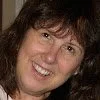
Keynote by journalist Miranda Spivack
BELLEVUE — The Washington Coalition for Open Government honored numerous individuals and organizations in advance of Sunshine Week at its annual Sunshine Breakfast & Awards Event.
About 150 people braved rain and snow on March 13, 2026 to attend the event at Embassy Suites in Bellevue, where guest speaker was Miranda Spivack, who wrote “Backroom Deals In Our Backyards” about advocates for transparency across the nation.
Awards were presented as follows:
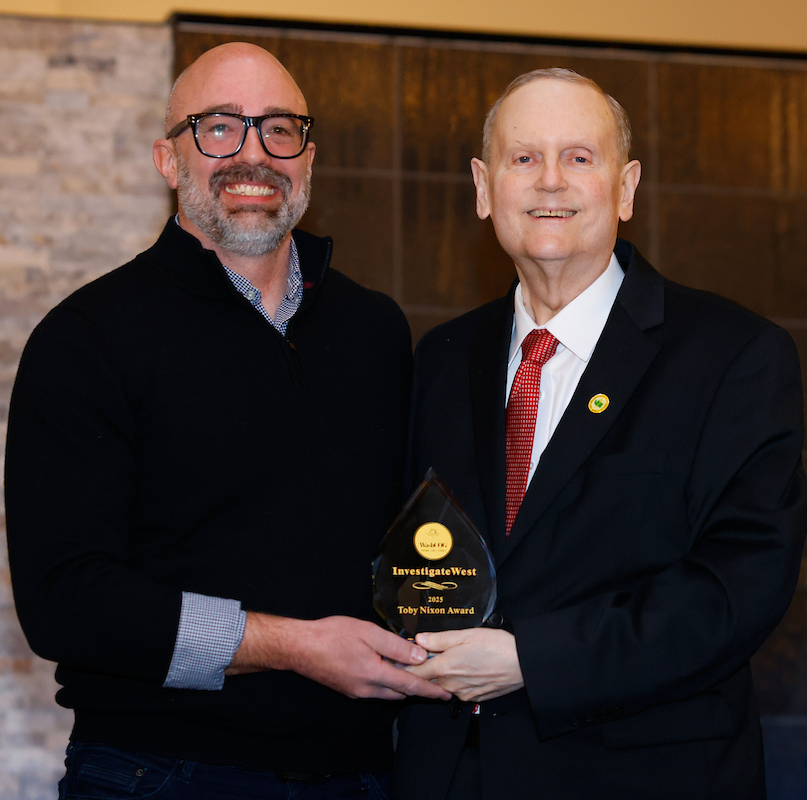
InvestigateWest Executive Director Jacob Fries accepts the Toby Nixon Award from Nixon, WashCOG President Emeritus. — Photo by Karen Ducey
InvestigateWest won the Toby Nixon Award for long-term commitment to the cause of open government. InvestigateWest consistently uses access and public records to produce investigative journalism that aims to hold government accountable. The 17-year-old nonprofit news organization also regularly partners with local and national news organizations on its investigations.
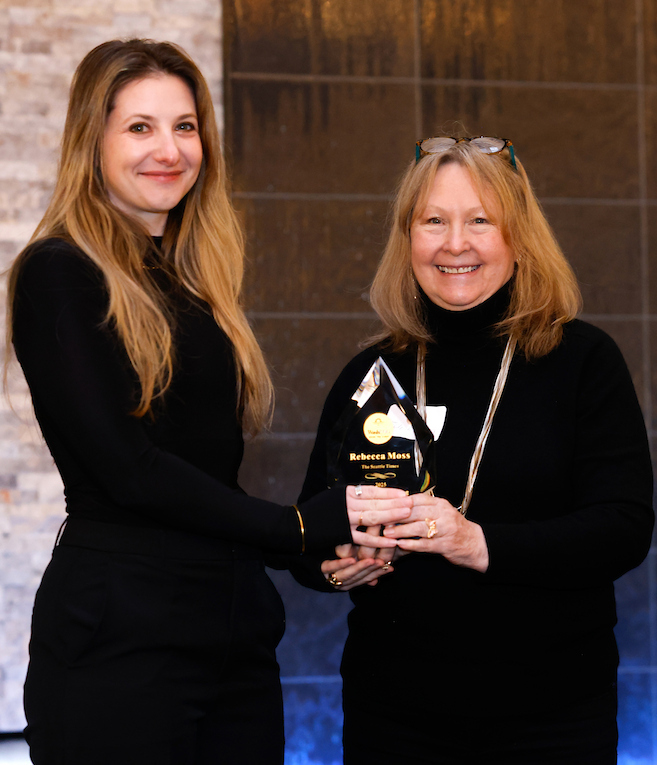
Rebecca Moss receives the Bunting Award from Juli Bunting — Photo by Karen Ducey
Rebecca Moss of The Seattle Times won the Kenneth Bunting Award for journalism that uses or advances Washington’s state open government laws or educates residents about them. Her investigative series on the state’s remote McNeil Island Commitment Center took years of work and research of thousands of records. Her stories reveal the state’s many problems in practice and accountability in managing sex offenders deemed most likely to reoffend.
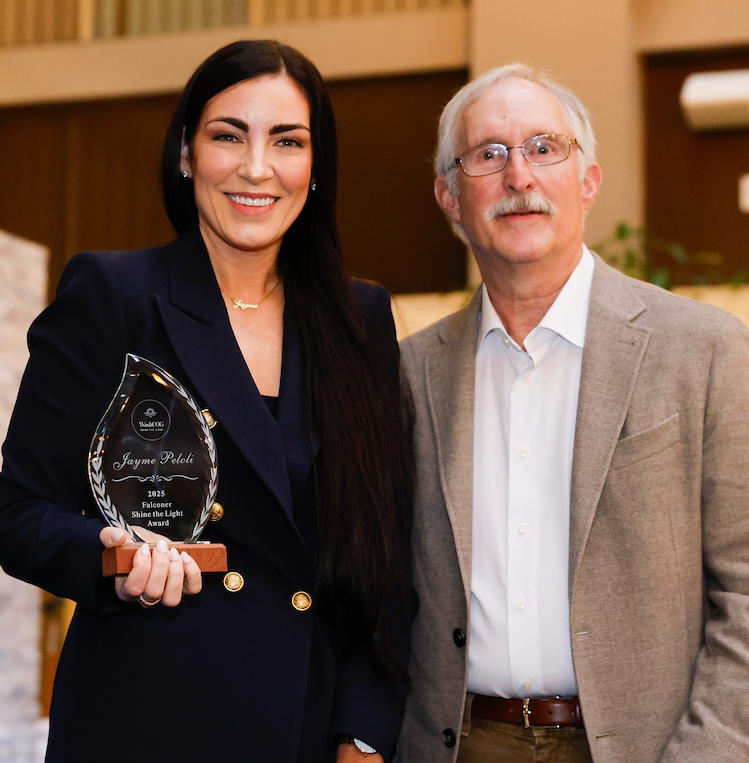
Jayme Peloli accepts the Falconer Shine the Light Award from WashCOG Secretary George Erb. — Photo by Karen Ducey
Jayme Peloli, mayor of Wilkeson, won the Falconer Shine the Light Award for using public records to uncover that decades of deferred maintenance that led to the failure of the Fairfax Bridge, then taking action to get the bridge back.
The award recognizes efforts that clearly illustrate how public records affect real people and helps promote understanding of why access is so important. Peloli was given a Key Award for her efforts, but the WashCOG board decided the impact and efforts going forward warranted the Falconer Shine the Light Award, as well.
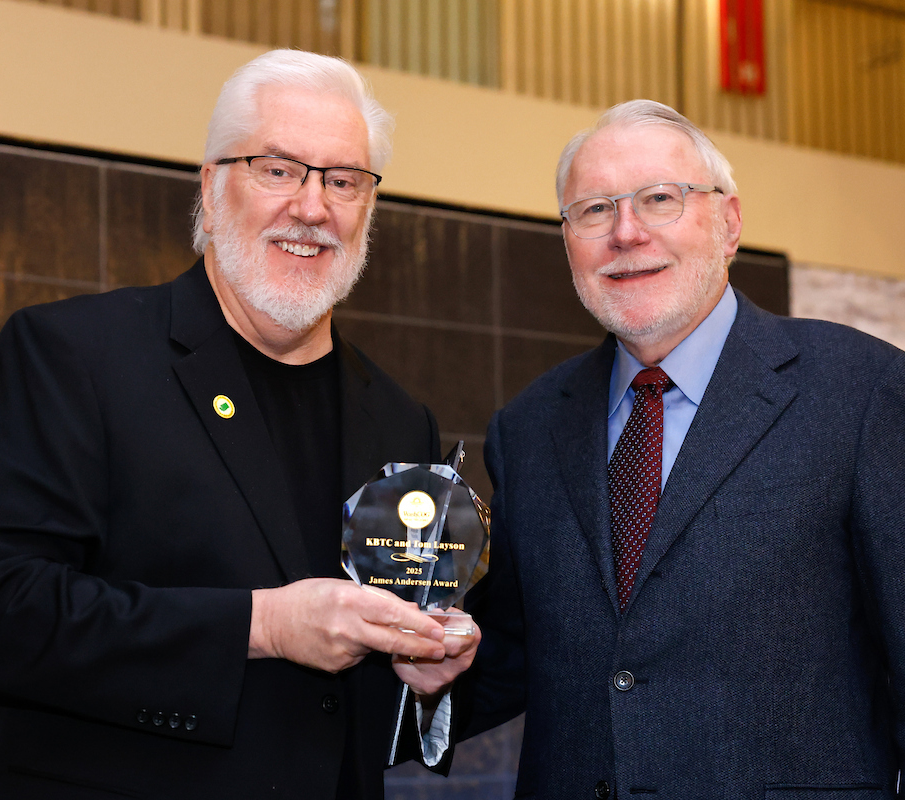
KBTC TV Managing Editor Tom Layson accepts the Andersen Award from WashCOG President Mike Fancher. — Photo by Karen Ducey
Tom Layson and KBTC won the James Andersen Award for years of work to promote the annual Sunshine Week in mid-March and the work of the Washington Coalition for Open Government. Layson, who produces Northwest Now for KBTC, announced he will retire this summer.
WashCOG also recognized the many recipients of Key Awards in 2025. This award recognizes those who have done something notable for the cause of open government. Among the year’s recipients are individuals and organizations, including journalists, a public official, an attorney and interested citizens.
The Port Townsend & Jefferson County Leader’s reporters extensively use public records in their work on a regular basis. In 2025, they produced a special section for Sunshine Week that provided good information for their readers about open government and civic engagement.
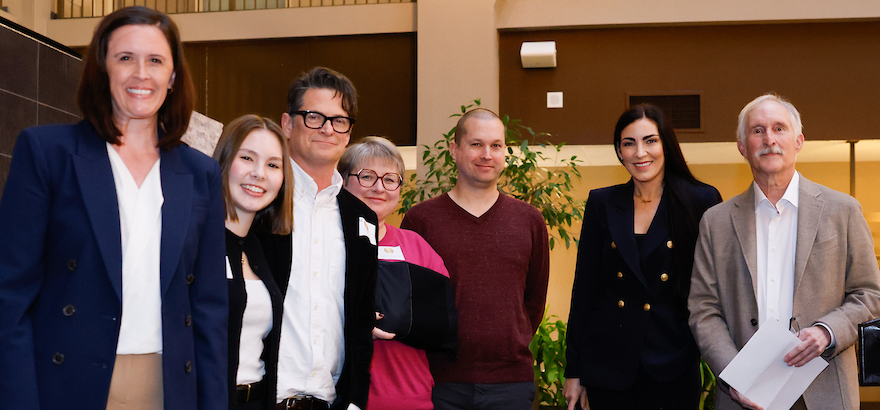
Key Award winners: parent activist Julie Gunter; UW Daily Editor-in-Chief Morgan Bortnick and Publisher John Tomasic; parent activists Allison and Joseph Riley; Wilkeson Mayor Jayme Peloli; WashCOG Secretary George Erb. — Photo by Karen Ducey.
R.L. McFarland took on the Walla Walla County Commissioners for violating the Open Public Meetings Act. He accused the commissioners of sending letters to the governor opposing pandemic rules that they inappropriately discussed without proper notice during a special meeting. McFarland took them to court for a multiyear battle, which was finally found in McFarland’s favor by the Court of Appeals.
David Burstein is a data science professor who lives in New Jersey and helps Washington and other states from afar. He posts records on his website that he obtains when he finds out they’re in danger of being destroyed. For Washington, he learned through a Seattle Times story about how the Office of Superintendent of Public Instruction was tossing certain records after six years. He obtained records to hold for parents who may need them.
Julie Gunter is a parent who was seeking older records to advocate for her minor child. She recognizes the importance that public records can hold over the long term and the real impacts that these decisions can have on people. It’s been an uphill climb for her, but the Legislature actually passed legislation in recent weeks that will require those types of records to be kept for 20 years instead of six. It was Gunter’s actions that made people pay attention and do something about it.
Joseph Riley and Allison Riley - This couple successfully sued the Kent School Board for several violations of the Open Public Meetings Act. They claimed it was illegal to have closed-door discussions with a consultant just to plan a school superintendent’s evaluation. They also proved another meeting was illegal because the board misstated what the meeting was about.
Asia Fields, Erasmus Baxter and Julia Furukawa were journalism students who, with attorney Bill Crittenden, sued Western Washington University over public records the university refused to turn over. They won after a six-year battle. The now-alumni of the university then donated the penalty money they were awarded to set up an investigative reporting fund for students.
The Daily of the University of Washington – This independent student newspaper covering the university’s Board of Regents recognized a problem when the board took up a controversial issue without setting up remote access so that public testifiers could provide comments on deliberations. The journalists recorded and live-tweeted events and promptly posted coverage, attempting to shine a light on a process that was not fully open to the interested public. Publisher John Tomasic and several staff members were celebrated at the breakfast.
Jayme Peloli, who was then a Wilkeson city council member, used public records to get access to state reports on the inspections and maintenance of the Fairfax Bridge. The state abruptly closed the bridge over the Carbon River Gorge last spring, shocking the town. Peloli found out that the state knew the bridge was deteriorating, but chose to ignore the damage rather than repair it.
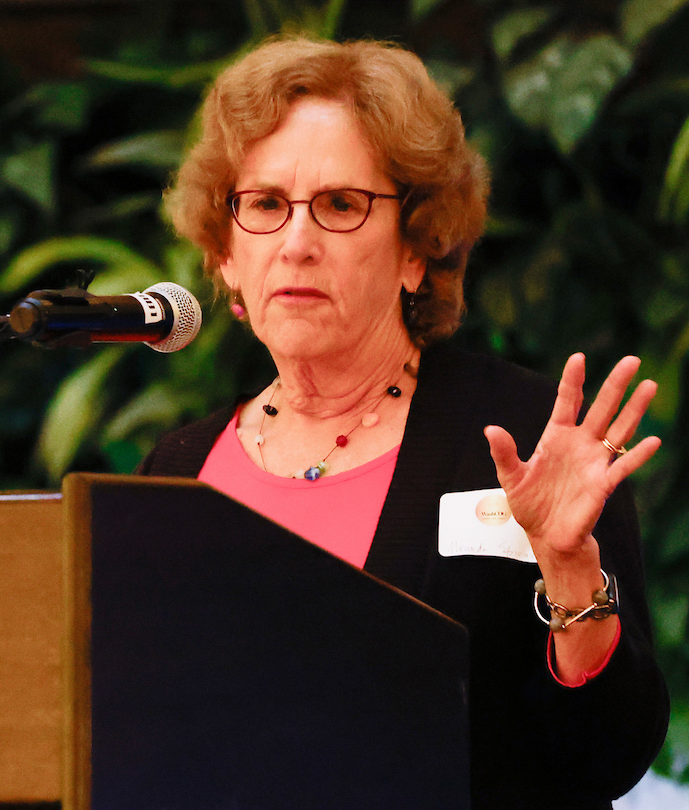
Miranda Spivack speaking at the Sunshine Breakfast. — Photo by Karen Ducey
Featured speaker was Miranda Spivack, a journalist and author whose latest book “Backroom Deals in Our Backyards: How Government Secrecy Harms our Communities — and the Local Heroes Fighting Back” tells the stories of five “accidental activists” whose use of access laws brought change to their communities.